

According to a survey by PwC, compliance is becoming a bigger part of digital transformation work. It found that 71% of organizations expect their digital transformation initiatives over the next three years to require compliance support.
That puts more pressure on GRC teams. Risks, policies, and issues cannot remain scattered across spreadsheets, emails, and disconnected processes. Organizations need a structured way to track ownership, monitor risk, manage compliance workflows, and route issues before they become bigger problems.
For people working with the ServiceNow GRC Platform, the challenge is not just understanding these processes. It is knowing how to configure and implement them effectively within the platform.
The GRC: Integrated Risk Management Implementation course helps professionals learn how to configure IRM applications in ServiceNow with the right structure. This guide covers the course structure, prerequisites, learning outcomes, and certification path.
What Does The GRC: Integrated Risk Management Implementation Course Help You Do
The GRC: Integrated Risk Management Implementation course helps you implement and configure ServiceNow IRM applications. It focuses on the practical and technical aspects of managing risk, compliance, and governance processes within the platform.
Implementing these applications involves more than configuring individual features. Risks, controls, policies, and issues are often linked, so changes in one area can affect another.
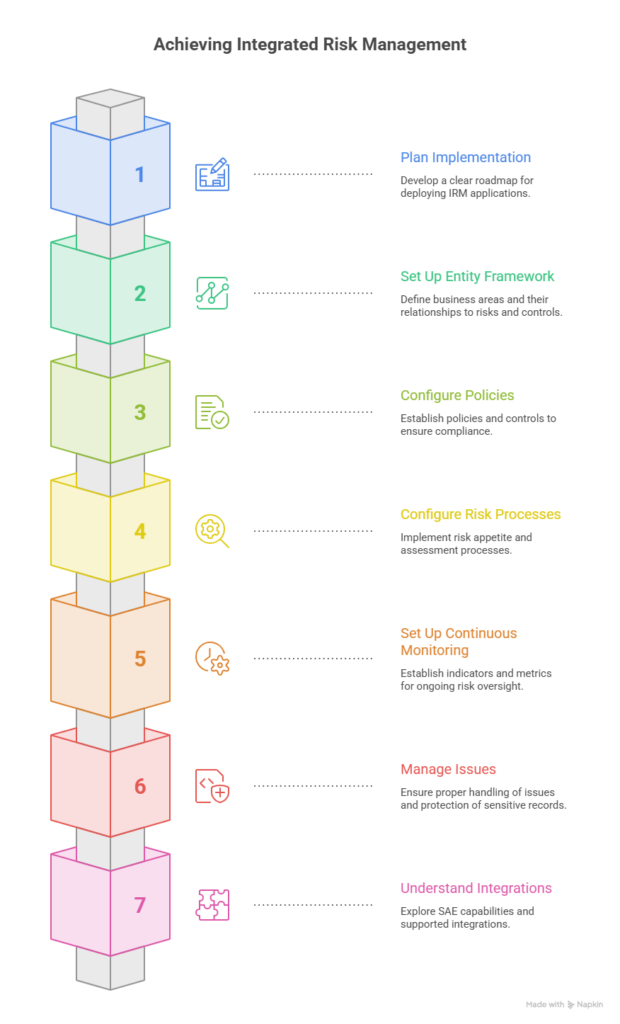
Here’s what the course helps you understand:
1. Plan an IRM Implementation More Clearly
You learn about implementation phases, stakeholder responsibilities, project roles, and key resources. This helps create a clearer plan for deploying and supporting IRM applications.
2. Set Up the Entity Framework
The course helps you understand entity scoping, ownership, and entity classes. This helps connect risks, controls, and compliance activities to the right business areas.
3. Configure Policy and Compliance Processes
You learn how policies, controls, approvals, acknowledgements, and exceptions are managed in ServiceNow. This provides a foundation for supporting compliance activities.
4. Configure Risk and Advanced Risk
The course explains how to set up risk appetite, risk assessments, and advanced risk processes. You also learn how assessments and reporting support risk management.
5. Set Up Continuous Monitoring
You learn how indicators and metrics are used to monitor risks and controls over time. This helps organizations maintain ongoing oversight instead of relying only on periodic reviews.
6. Manage Issues and Sensitive Records
The course covers issue routing, confidential records, and access controls. This helps ensure issues are handled properly and sensitive information remains protected.
7. Understand Supporting Capabilities and Integrations
You also explore Smart Assessment Engine (SAE) capabilities and supported integrations. This provides a broader understanding of how IRM works within the ServiceNow platform.
Now that we understand the main areas this course covers, let’s look at how the course is structured and delivered.
An Overview of the GRC: Integrated Risk Management Implementation Course
The GRC: Integrated Risk Management Implementation course teaches the skills needed to configure and support ServiceNow IRM applications. It combines implementation concepts with practical exercises to help you understand how core IRM processes work within the platform.
Here’s a quick overview of the course:
| Feature | Details |
| Duration | 3 days |
| Delivery Format | Instructor-led training |
| Learning Style | Lectures, demonstrations, group discussions, activities, and hands-on labs |
| Primary Skills Strengthened | Risk Management, Policy and Compliance Management, Governance, Risk, and Compliance |
Who Is This Course Designed for?
This course is intended for professionals involved in implementing, configuring, supporting, or overseeing ServiceNow IRM applications.
It is particularly relevant for:
- Technical consultants, implementers, developers, and architects responsible for configuring or supporting ServiceNow GRC applications.
- Project, program, and engagement managers leading ServiceNow IRM implementation initiatives.
- Operations managers who oversee risk, compliance, and governance activities supported by ServiceNow IRM.
- Customers, partners, and employees are involved in setting up features, functions, and data used across ServiceNow GRC applications.
Before You Register: Readiness Checklist
To get the most value from the training, you should complete the required prerequisite courses before attending:
- Welcome to ServiceNow
- ServiceNow Administration Fundamentals
- GRC: Integrated Risk Management Fundamentals
ServiceNow also recommends completing the ServiceNow Platform Implementation course.
Because this course focuses on implementation and configuration, a basic understanding of ServiceNow administration and IRM concepts will help you follow the hands-on exercises and discussions more easily.
How This Course Connects to the CIS-Risk and Compliance Certification
The GRC: Integrated Risk Management Implementation course is an important part of the Certified Implementation Specialist – Risk and Compliance certification path.
After completing this course, ServiceNow offers a voucher code to register for the CIS-Risk and Compliance exam. However, this course is only one part of the recommended learning journey.
Before taking the exam, ServiceNow also recommends completing the following courses:
- GRC: Audit Management Essentials
- GRC: Classic Risk Assessment Fundamentals
- GRC: Regulatory Change Management Essentials
If your goal is to earn the CIS-Risk and Compliance certification, this course provides a strong foundation and helps prepare you for the next steps in the certification path.
How to Enroll in the GRC: Integrated Risk Management Implementation Course
The GRC: Integrated Risk Management Implementation course is available through ServiceNow training channels on-demand and instructor-led options through authorized training partners.
Before enrolling, make sure you understand the course requirements and the level of preparation expected. Here’s how you can approach enrollment:
Find the Course in ServiceNow University
Visit ServiceNow University and search for GRC: Integrated Risk Management Implementation. This will take you to the course page, where you can view the latest training information.
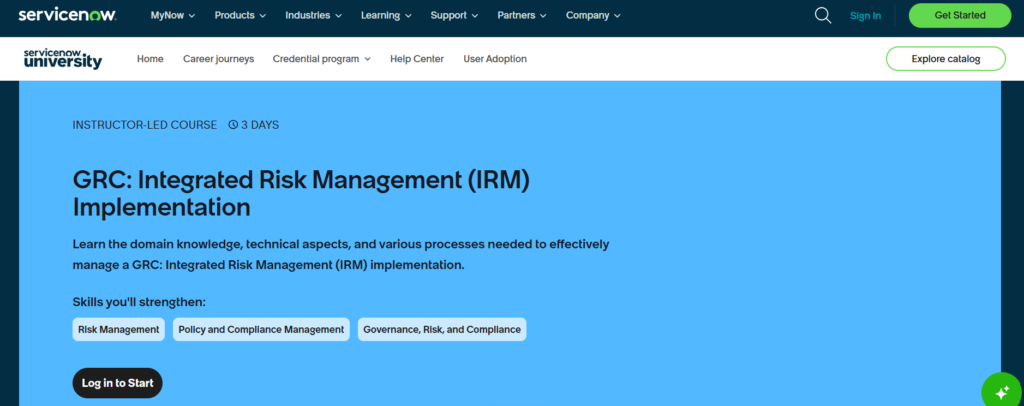
Source – ServiceNow
2. Explore Upcoming Training Sessions
Browse the available instructor-led sessions to see upcoming dates, locations, and delivery options. Availability may vary depending on your region.
3. Select a Training Option
Choose the session that best fits your schedule. Depending on availability, you may be able to attend through a live virtual classroom or an in-person instructor-led format.
4. Complete Your Registration
Follow the registration process to secure your seat in the course. Once your enrollment is confirmed, you will receive details about the training schedule and course access.
Easy Way: Directly Enroll Through Datacipher Education Services
As an authorized ServiceNow training partner, we can help individuals and organizations register for the GRC: Integrated Risk Management Implementation course.
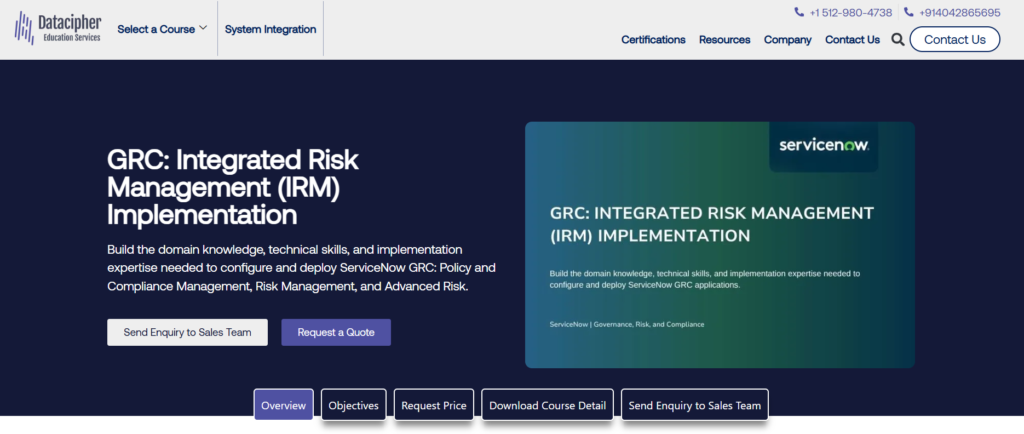
Source: Datacipher
By enrolling with Datacipher, you can unlock benefits like:
- Authorized ServiceNow training: Access official ServiceNow courses delivered by an authorized training partner.
- Instructor-led learning: Learn through guided training sessions, demonstrations, and hands-on labs.
- Training for individuals and teams: Flexible options for professionals, corporate groups, and enterprise training needs.
- Guidance throughout the learning journey: Get support with course selection, scheduling, and training plans.
What’s the wait? Start building your ServiceNow Integrated risk management expertise with Datacipher today. You can either fill out the form in the course page or send us an email at training@datacipher.net to get started.
Related ServiceNow Course Guides You Can Explore
To continue building your ServiceNow security operations, vulnerability response, and incident response skills, explore these course guides next:
- Vulnerability Response Implementation Course Guide: Everything You Need to Know
- ServiceNow Security Incident Response Implementation Training: What You’ll Learn
- Thinking About the ServiceNow Security Operations Fundamentals Course? Here’s What It Covers
Frequently Asked Questions
1. What is the difference between ServiceNow IRM Fundamentals and IRM Implementation?
IRM Fundamentals course introduces the core concepts and capabilities of ServiceNow IRM. Whereas the IRM Implementation course builds on that foundation by focusing on how IRM applications are set up, configured, and implemented within the platform.
2. Is this course useful for professionals who already work with ServiceNow GRC?
Yes. Even if you already work with ServiceNow GRC, the course covers implementation-focused topics such as entity management, policy and compliance configuration, risk management, continuous monitoring, and issue management. This can help broaden your understanding of how these applications are configured and managed.
3. How is the IRM Implementation course different from learning through documentation alone?
Documentation can help you understand individual features, but this course brings the topics together through instructor-led training, demonstrations, and hands-on labs. It gives you an opportunity to see how different IRM components work together in an implementation setting.
4. How technical is the GRC: Integrated Risk Management Implementation course?
This course is more technical than an introductory IRM course because it focuses on how ServiceNow IRM applications are set up and configured. You will work with topics such as entity management, policy and compliance configuration, risk assessments, continuous monitoring, and integrations. So, a basic understanding of ServiceNow administration is helpful.


